🌿 Learning Through the Hive: How Beekeeping Shapes Our Home Education Journey (04.11.25)

Home education in our house looks a little different than textbooks at the kitchen table (though we have plenty of those too!). Here, learning often starts with the soft hum of wings, the smell of warm beeswax, and a walk down to the hives. 🐝✨

Beekeeping isn’t just a hobby for us — it’s a huge part of our children’s education and daily life. The hive is our classroom, nature is our curriculum, and the bees… well, they’re the best teachers we could ask for.

🌼 Real-World Learning, Honeybee Style

When we visit the hives, we aren’t just checking frames — we’re learning. Every inspection, every observation, every jar of honey is a lesson filled with curiosity, responsibility, and wonder.

Here are some of the skills the boys learn through beekeeping:

🧠 Science & Nature

Life cycles (egg → larva → pupa → bee)

Plant and flower identification

Seasons and their effect on the hive

The role pollinators play in our ecosystem

💛 Responsibility & Routine

Bees don’t wait for later — and working with them teaches patience, planning, and commitment.

We can’t skip hive checks because it’s a bit chilly or we’d rather be inside… the bees come first.

🛠️ Practical Hands-On Skills

Candle and wax melt making

Honey filtering and jarring

Labelling, weighing, packing orders

Basic carpentry for hive equipment

Learning to work with your hands is powerful — and sticky. Very sticky. 😂🍯

💰 Business & Life Skills

Running our little bee business means the children learn:

Maths through stock counting and weighing

Customer service at markets

Marketing and creativity (yes, they help with ideas!)

Pride in creating and selling something real

They aren’t just watching grown-ups work — they’re part of it.

🐝 Life Skills You Can’t Teach in a Book

Perhaps the most beautiful lessons come quietly — through calm hive moments and little victories:

Confidence when holding a frame full of bees and staying steady

Gentleness and respect for living creatures

Teamwork when we all suit up together

Problem-solving when a hive throws us a surprise (and they do!)

And yes — sometimes the bees remind us who’s really in charge with a sting or two.

Another lesson: resilience. 💪🐝

💛 A Childhood Filled With Meaning

We chose home education so our children could grow up learning from life, not just learning about life.

Beekeeping gives them:

🌸 fresh air

🌿 connection to nature

🍯 pride in their work

👨‍👩‍👦 family time

📚 real-world knowledge they’ll carry forever

And honestly? Watching their excitement when they spot the queen or taste honey straight from the comb… it’s magic.

Sticky, giggly, muddy-boot, Bee-suit-summer-day magic.

We wouldn’t trade it for the world.

🍯 Until next time…

If you ever see a small beekeeper in an oversized suit proudly inspecting a frame… that’s probably one of ours. They’re learning, growing, and buzzing right along with the bees.

And truly — we think that’s education at its sweetest. 💛
🍯 How Bees Make Honey (and Why No Two Jars Taste the Same) (20.10.25)

There’s something so magical about opening a jar of honey — that golden glow, the rich, comforting sweetness, and the thought that it’s all been made by thousands of tiny wings and tireless bees. 🐝✨

But have you ever wondered how the bees actually make honey? Or why each jar has its own unique flavour and colour? Let’s take a peek inside the hive and find out!

🌸 Step 1: Collecting the Nectar

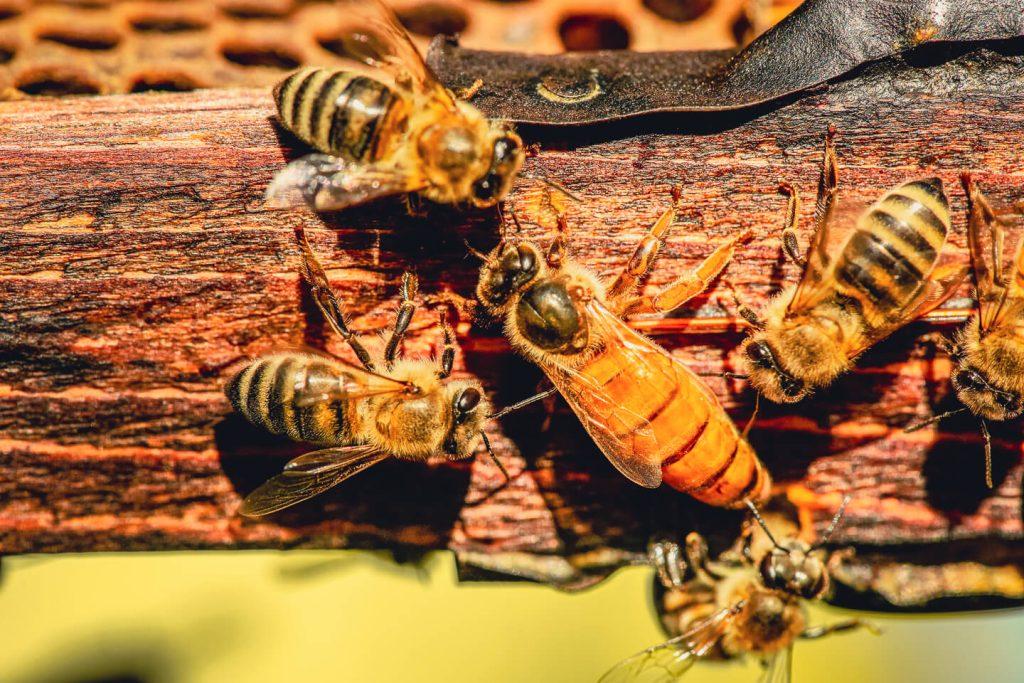
It all starts with the foragers — those busy worker bees you see darting between flowers. They visit hundreds of blooms a day, sipping nectar with their long tongues and storing it in their special “honey stomach.” 🍯

When their nectar tank is full, they fly back home to the hive — a little heavier, but with the sweetest cargo imaginable!

🐝 Step 2: The Nectar Hand-Off

Back inside the hive, the forager bee passes the nectar to another worker bee mouth-to-mouth. This isn’t just sharing — it’s the start of the honey-making magic! ✨

The bees mix the nectar with special enzymes that begin breaking down the sugars, turning it into something more stable and easier to store.

💨 Step 3: The Wing Workout

Next comes the drying stage — and this is where teamwork really shines. Dozens of bees line up and fan their wings over the nectar to evaporate any extra water.

They keep at it until the thick, golden honey we know and love forms. It’s a full-body workout with a delicious result! 💪🍯

🧱 Step 4: The Perfect Seal

Once the honey is ready, the bees carefully seal each hexagonal cell with a thin layer of beeswax — nature’s own freshness seal! This keeps the honey safe, dry, and ready for when the colony needs it.

🌼 Why No Two Jars Taste the Same

Here’s where the magic (and the mystery) really begins — every jar of honey is different because every season, every flower, and every hive is different! 🌸

The honey made in Overseal, surrounded by fruit blossom, tastes light and floral — while the batch from Normanton le Heath, with all those wildflowers, has a deeper, richer flavour.

It’s like the countryside bottled up — each jar a little snapshot of nature’s menu that season. 💛

💛 A True Taste of Nature

Every spoonful of honey tells a story — of sunny days, blooming fields, and the quiet teamwork of thousands of bees.

That’s what makes real, local honey so special: it’s never quite the same twice, but it’s always a little bit of magic. ✨🍯🐝

🐝 The Drones’ Day Off – The (Slightly Lazy) Life of the Male Bees! (13.10.25)

When you think of bees, you probably picture the busy worker girls — buzzing around collecting pollen, feeding larvae, cleaning the hive, and basically running the whole operation. But let’s not forget about the drones, the male bees of the hive!

They might have a bit of a lazy reputation, but there’s more to these chaps than meets the eye. So today, we’re shining the spotlight on the boys — because they might be last to leave the hive, but they’re definitely not least. 💛

🐝 Meet the Drones

Drones are the male bees of the colony, and you can spot them straight away if you know what to look for. They’re bigger, rounder, and chunkier than the female worker bees, with large eyes that meet at the top of their heads — perfect for spotting queens during their one and only job (more on that in a minute!).

And here’s the fun fact that often surprises people — drones don’t have stingers!

That’s right, these gentle giants couldn’t sting you even if they wanted to. They’re all about charm, not harm.

🍯 The Drone Lifestyle

While the ladies are working around the clock — foraging, feeding, cleaning, and guarding — the drones take life at a slower pace. Their main job? To mate with a queen from another colony to ensure the survival of the species.

It’s an incredibly important task, even if it means they spend most of their days hanging around the hive, eating honey, and waiting for the perfect flight day. Think of them as the hive’s gentlemen-in-waiting!

👑 The Moment of Glory

When the time comes, drones take to the skies on a mating flight in search of a virgin queen. It’s their one big moment to shine — quite literally their life’s purpose.

After mating, the drones sadly die (yes, it’s dramatic, we know!), but they’ve played their vital part in the circle of hive life.

❄️ When Autumn Comes…

As the weather cools and nectar becomes scarce, the worker bees start preparing for winter — and that means conserving resources. Sadly for the drones, they’re gently shown the door (well, sometimes not so gently).

It’s a tough end for the lads, but they’ll be back next spring, ready to continue their important role in nature’s rhythm.

💛 Last But Not Least

So, while the drones might seem like the laid-back lads of the hive, they’re absolutely essential to the colony’s future. Without them, there’d be no new queens and no new generations of bees.

Next time you spot a big, fluffy, stingless bee lounging near the hive entrance — give him a little nod of respect. He’s doing his part… just on his own schedule! 😉🐝

The Busy Life of Lady Bees: Jobs Inside the Hive (06.10.25)

When we think of bees, it’s usually honey on toast, buzzing in the garden, or perhaps a queen bee in her crown 👑🐝. But did you know that almost all of the work inside a hive is carried out by the female worker bees? From the moment they hatch, each lady bee has an important job to do, and together they keep the whole hive running like clockwork.

Let’s take a peek inside to see what the girls get up to.

🐝 Nurse Bees – The Carers

When worker bees are just a few days old, their first job is to care for the baby bees (larvae). These nurse bees feed the little ones a special mix of nectar and pollen called bee bread and, for future queens, the very special royal jelly. They make sure the next generation is healthy and strong.

🧹 Housekeeping Bees – The Cleaners

Cleanliness is key to a healthy hive. Some bees take on the role of housekeepers, tidying up, removing any debris, and making sure the hive stays hygienic. A spotless home is vital when you’re living with tens of thousands of sisters!

🍯 Wax Builders – The Architects

When they’re a little older, worker bees develop wax-producing glands. With these, they build the hexagonal honeycomb cells — perfect little storage pots for honey, pollen, and baby bees. These architects are true natural engineers, creating one of the most efficient designs in the world.

🏰 Guard Bees – The Protectors

Not all visitors are welcome! Guard bees stand watch at the entrance of the hive, checking who comes in and who stays out. They’re always on the lookout for intruders like wasps or bees from other colonies trying to sneak a taste of honey.

🌸 Forager Bees – The Adventurers

Finally, when they’re around three weeks old, bees graduate to the most famous job of all: foraging. These adventurers fly out into the world, visiting flowers, collecting nectar and pollen, and pollinating plants as they go. It’s hard work, but it’s the reason we have so many of our fruits, veggies, and flowers.

💛 Teamwork Makes the Honey Work

What’s truly amazing is how seamlessly all these jobs flow together. A single worker bee may change roles several times in her life, depending on the hive’s needs. From nursing to building, guarding to foraging, the lady bees do it all — while the drones (the males) mostly just eat and wait around for their one big job!

So next time you enjoy a spoonful of honey or watch a bee buzzing in your garden, remember the incredible sisterhood at work behind the scenes. These hardworking ladies really are the unsung heroines of the hive.

🐝 Life in Our Hives: A Family Story from Overseal (29.09.2025)

When people see a jar of golden honey in our shop, they often ask, “Where does it come from?” The answer is simple: straight from our own back garden — and a little patch of countryside nearby.

Our family currently keeps five hives at home in Overseal (more incoming) and one very busy, very productive hive in Normanton le Heath, which lives at my parents’ house. Each hive has its own personality, flavour, and rhythm — and together they’re the heartbeat of our little bee-loving family business.

🌸 Meet Our Bees

We care for two wonderful types of honeybees: Carniolan Bees and Buckfast Honeybees. They’re gentle, hardworking, and thrive on the countryside that surrounds them.

In Overseal, our bees feast on local fruit blossoms and garden flowers, giving the honey a light, fruity flavour. Over in Normanton le Heath, the wildflower meadows produce honey that’s rich, floral, and completely unique. My dad loves watching the Normanton hive from his office desk — it’s like having a live nature channel right outside his window! 🐝

Two hives, two flavours — nature’s way of reminding us that no two drops of honey are ever the same.

🧑🏻‍👩🏻‍🧒🏻‍👦🏻A True Family Affair

Beekeeping for us isn’t just about honey — it’s about family. We all get involved: Will, the boys, and me. The boys love to name the bees (our boys are called Burts, the girls are Beelinda, and the queen is always Beetrice 👑).

It’s also become a wonderful form of home education. The boys learn first-hand about science, nature, sustainability, and the importance of pollinators — all while suited up and helping out with hive checks.

And yes, we’ve all had our fair share of adventures with the bees! For a while, I only wore a hooded veil — until the day I got stung more than 30 times in one go. Needless to say, I’ve now got myself a full bee suit… and it’s pink. 💗 Will hasn’t escaped either — he’s even taken a few stings to the face (true dedication, if you ask me!). Together, we’ve learned that a sting or two is just part of the beekeeping journey.

🐝 Buzzing Adventures

Like any family, our hives sometimes surprise us. This summer, we had an accidental swarm when Queen Beetrice decided she fancied a road trip — straight onto our neighbour’s car! Luckily, we managed to carefully capture her and relocate her into a brand-new hive, and all was well again in the kingdom.

Moments like these remind us that beekeeping is full of both challenges and joys, and we wouldn’t change it for the world.

👓 Grandad the Bee Watcher (and Nanny the Honey Seller)

Our hive at Normanton le Heath has two very special guardians — my mum and dad. From his desk in his home office, Dad has the perfect view of the hive and spends hours watching the bees come and go. He says it’s better than any TV show — and we think the bees quite like having their biggest fan cheering them on every day. 🐝💛

Meanwhile, Nanny proudly helps sell the honey from that hive, sharing its rich, floral flavour with the local community. Together, they make sure Beetrice and her busy workers are not only cared for but celebrated too.

🍯 From Hive to Home

Every jar of honey, every beeswax candle, and every bee-inspired item we sell comes directly from our hives. Our harvests are seasonal, sustainable, and eco-friendly, which means each product is as natural as it gets.

When you enjoy our honey, you’re tasting the blossoms, wildflowers, and countryside that our bees have worked so hard to forage from. It’s the story of our family, our bees, and the land we love — all wrapped up in one sweet spoonful.

💛 The Heart of the Hive

Beekeeping has given us so much more than honey. It’s given us family time, laughter, lessons, and plenty of buzz-filled memories. Our hives aren’t just boxes in the garden — they’re part of our story, and we’re so proud to share them with you.

So next time you drizzle our honey on your toast or light one of our candles, know that it’s come from our little hive in Overseal — or maybe even from the hive that Nanny sells from and Grandad loves to watch in Normanton le Heath. 🐝✨

All Hail the Queen Bee. (23.09.25)

When we think of bees, the first image that often comes to mind is a buzzing worker collecting nectar. But in every thriving hive, there’s one bee who truly rules the roost: the Queen Bee. She may be the largest bee in the colony, but her importance goes far beyond size.

Let’s take a closer look at the life and role of the queen bee — the heartbeat of the hive.

🐝 The Life of a Queen Bee

Every queen starts life like any other female bee — as a larva. What makes her different? She is fed royal jelly, a nutrient-rich secretion produced by worker bees. This special diet transforms her into a queen, allowing her to grow larger, live longer (up to 5 years), and take on her vital role in the colony.

👑 Egg-Laying Superstar

The queen bee’s primary job is to lay eggs. During peak season, she can lay up to 2,000 eggs a day, ensuring the hive remains strong and populous. Every worker bee in the hive owes its life to her tireless egg-laying, which keeps the colony thriving.

🐝 Hive Harmony: The Queen’s Influence

Beyond reproduction, the queen maintains harmony in the hive through pheromones, known as “queen substance.” These chemical signals:

Keep worker bees focused on their roles

Prevent other females from becoming queens

Maintain organization and balance throughout the colony

Without her, the hive would lose direction — the queen truly is the glue that holds it all together.

🌸 Swarming and New Queens

When the hive becomes crowded, the queen plays a role in swarming — leaving the hive with a portion of workers to form a new colony. Meanwhile, the workers raise a new queen from specially-fed larvae. This natural cycle ensures the survival and spread of honeybee populations.

💛 Why the Queen Bee Matters to Us

Every jar of honey, every beeswax candle, and every bit of propolis owes its existence to the queen bee. Her ability to sustain and organize the hive makes all these natural treasures possible.

She’s a powerful reminder that leadership, teamwork, and dedication can create extraordinary results — even in the tiniest of creatures.

🐝 The Buzzing Conclusion

The queen bee is more than royalty — she is the heart and soul of the hive. Next time you drizzle honey into your tea or light a beeswax candle, remember the incredible queen bee working tirelessly behind the scenes.

💛 Bring a little hive magic into your home with our honey, candles, and bee-inspired goodies — all made possible by the hardworking bees and their amazing queen.


How Bees Improve Our Lives: 5 Surprising Benefits. (17.09.25)

🐝 5 Surprising Ways Bees Improve Our Lives

When you think of bees, the first thing that comes to mind is probably honey (and maybe a little buzzing around your garden). But these tiny creatures do so much more than provide us with a sweet treat. In fact, bees are quietly shaping our world in ways you might never have imagined. From the food on our plates to the glow on our skin, they’re nature’s little superheroes.

Here are five surprising ways bees make our lives sweeter, healthier, and more beautiful.

🍎 1. Bees Keep Our Plates Full

Bees are master pollinators, and without them, much of our food simply wouldn’t exist. Apples, strawberries, almonds, cucumbers, pumpkins — the list goes on. Around one-third of the food we eat depends on pollination, and bees are responsible for a big chunk of that work.

So, the next time you enjoy a crunchy apple or a handful of nuts, thank a bee! And of course, honey itself is the most delicious reminder of their hard work. Every golden spoonful is proof of the amazing link between bees and our food.

🌸 2. Bees Create Beautiful Spaces

It’s not just food — bees are behind the beauty of our gardens, fields, and countryside too. Their pollination keeps flowers blooming, trees thriving, and wild habitats alive with colour. Without bees, our landscapes would look very different (and a lot less pretty).

That vase of fresh flowers on your table? A bee probably helped it get there. It’s a little everyday magic we often take for granted.

✨ 3. Bees Give Us Natural Skincare Superheroes

Bees don’t just keep nature flourishing — they also provide incredible natural ingredients for our skincare. Propolis, beeswax, and royal jelly are all packed with benefits:

Propolis helps calm redness, fight bacteria, and promote healing.

Beeswax locks in moisture, leaving skin soft and protected.

Royal jelly is full of nutrients that nourish the skin.

It’s no wonder more and more natural beauty lovers are turning to bee-based skincare. Your skin gets the glow, and you get peace of mind knowing it came straight from the hive.

🕯️ 4. Bees Light Up Our Homes

Here’s something you might not know: beeswax makes some of the cleanest, longest-lasting candles in the world. Unlike paraffin, beeswax candles burn with a natural golden glow and release a subtle honeyed scent. They don’t just look beautiful — they’re also a healthier choice for your home.

A beeswax candle on the table brings warmth, calm, and a touch of nature indoors. It’s like bottling up that golden summer sunlight for a cozy evening in.

💛 5. Bees Teach Us Community & Resilience

Bees aren’t just fascinating because of what they make — they’re inspiring because of how they live. A hive works together in perfect harmony: each bee has a role, and the whole colony thrives on cooperation and resilience.

There’s a lesson in that for us humans too. By supporting local beekeepers and choosing bee-friendly products, we become part of that bigger hive — protecting bees and enjoying the goodness they bring to our lives.

🐝 The Buzzing Conclusion

Bees are so much more than honey-makers. They keep our diets colourful, our gardens thriving, our homes glowing, and even our skin radiant. These little pollinators are proof that the smallest creatures can have the biggest impact.

So, the next time you see a bee buzzing by, remember: it’s working tirelessly to make your world sweeter in more ways than one.

Shopping Cart

    Your cart is empty